Elevator Handrail Design
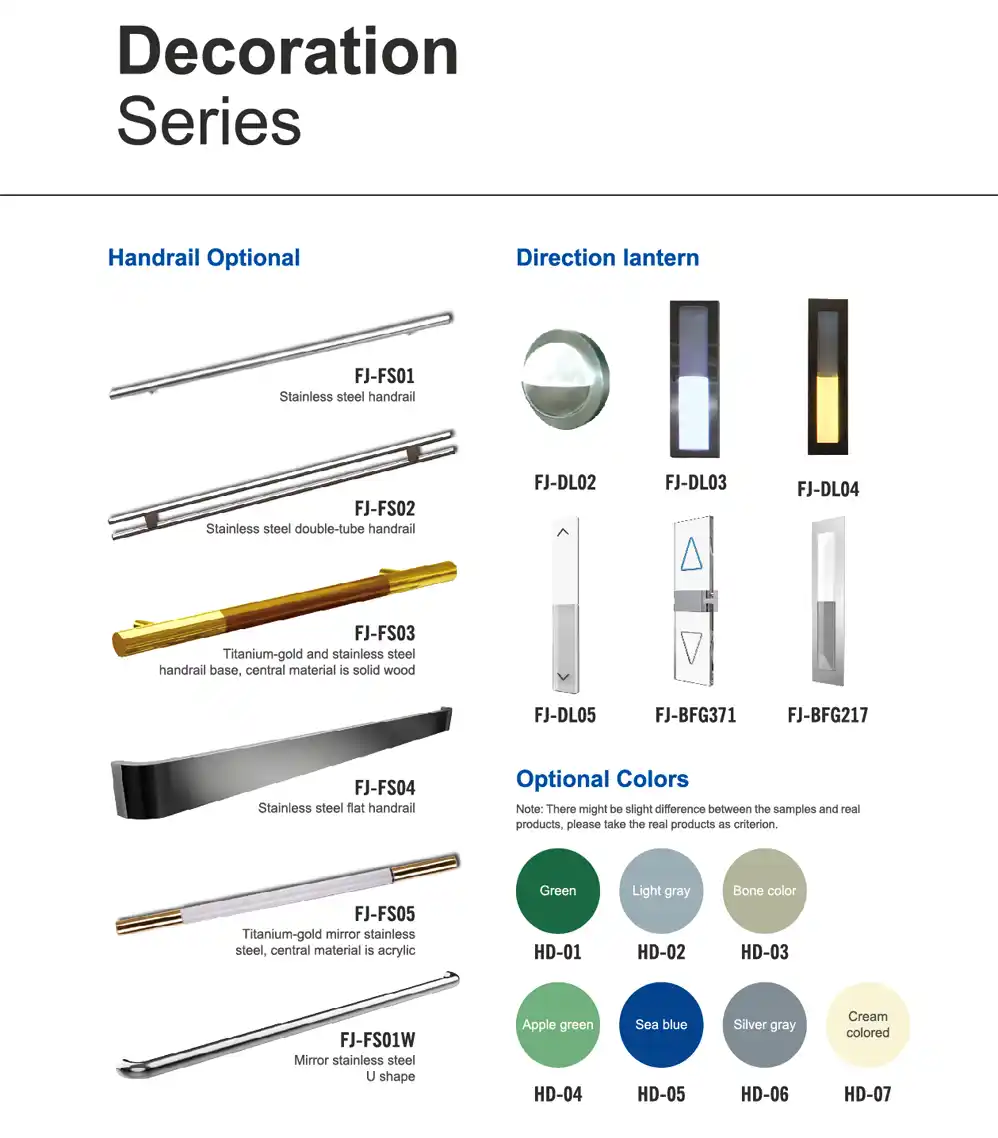
Material Standard Designs Stainless Steel Tubular (Ø35-50mm), Flat Profile Laminated Glass Frameless, U-Channel Mounted Solid Wood Oak/Teak/Walnut, Radiused Edges Brushed Aluminum Slim Profile, Seamless Joints
BrandFUJI Model: FE-FS
OriginCHINA
- Key Elements of Elevator Handrail Design: Materials: Stainless Steel: Durable
- resistant to corrosion
- and easy to maintain. Aluminum: Lightweight
- cost-effective
- and resistant to rust. Wood: Rarely used but provides a classic aesthetic
- usually found in luxury designs. Rubber/Soft Coating: Often applied for better grip and comfort
- especially for moving walkways. Shape and Style: Straight Handrails: The most common and simple design
- offering steady support. Curved Handrails: These follow the natural curves of the elevator shaft
- providing a more ergonomic grip. Retractable Handrails: Often seen in elevators with space constraints
- retracting into the wall when not in use. Modular Handrails: Adjustable designs for customization in various elevator models. Length and Height: Standard handrails are positioned at a height of 30 to 40 inches from the floor for accessibility. Handrails should extend for the full length of the elevator cabin
- especially in larger units
- to provide continuous support. In wider cabins
- handrails may have multiple segments placed along different sides. Finish: Polished Finish: Provides a sleek and modern look. Matte or Brushed Finish: Gives a more contemporary and low-maintenance option. Colored Finishes: For a more customized or branded look
- including anodized finishes in various colors. Grip Features: Textured Grip: Ensures passengers can hold the rail comfortably
- even with moist hands. Ergonomic Designs: Handrails that are designed to fit the hand naturally
- minimizing stress during use. Safety Features: Smooth Edges: To prevent injury during entry or exit. Non-Slip Coatings: Essential for ensuring safety
- particularly in wet conditions. Flame Retardant Materials: In high-rise buildings
- handrails must meet fire safety regulations. Lighting: Backlit Handrails: Some modern designs feature handrails with integrated LED lighting
- offering both aesthetic appeal and added visibility in low-light conditions.
Description
Product Details Elevator Handrail Design Handrails – Sleek stainless steel, glass, or wood designs with ADA-compliant profiles for safety and style. Wall-mounted or glass-clamp options available.
Relevant services
Product Import
Sourcing certified premium products from world-class manufacturers. We manage logistics, customs, and quality verification end to end.
Elevator Installation
Precision installation engineered to international safety standards — from shaft preparation through commissioning and handover.
Elevator Maintenance
Preventive maintenance programs that keep vertical transportation systems flawless and compliant.